Enhancing Critical Thinking and Resilience in a Teacher Education Master’s Program
Carmen Navarro-Mateos

José Mora-González
Isaac J. Pérez-López
*Corresponding author: Carmen Navarro-Mateos carmenavarro@ugr.es
Cite this article
Navarro-Mateos, C., Mora-González, J., & Pérez-López, I. J. (2026). Enhancing critical thinking and resilience in a teacher education master’s program. Apunts. Educación Física y Deportes, 165, 26-35. https://doi.org/10.5672/apunts.2014-0983.es.2026.165.03
Abstract
This study analyzes the effects of a gamification project inspired by the television series Black Mirror to evaluate critical thinking, resilience, and social and emotional skills in students enrolled in a Master’s in Education program (concentration in physical education). The idea arose from the need to address emotional and educational challenges during the college years, particularly in the training of future teachers, who must acquire solid social and emotional skills to manage complex educational situations. The intervention included a sample of 26 students, a quasi-experimental design, and pre- and post-intervention measurements. The project also featured an ad hoc mobile application designed to provoke the same feelings and emotions as those portrayed in the “Nosedive” episode of Black Mirror, a fundamental aspect in any gamification project. The results showed statistically meaningful improvements in all the dimensions of critical thinking, with especially strong effects in recognition of assumptions and in the overall score. Some 96% of the students also increased their initial resilience score. Regarding emotional intelligence, more than half of the students shifted from having low or excessive attention to feelings to more adequate levels, although no meaningful changes were detected in the “clarity” or “emotional regulation” variables. These findings support the value of meaningful narratives, technological resources, and student-centered strategies in fostering the development of teaching skills that can be applied to their future teaching careers.
Introduction
Education systems have recently undergone various structural and pedagogical transformations that often do not prioritize the emotional needs of students (Peña-Casares & Aguaded-Ramírez, 2019). In this sense, it is essential to restore the importance of emotional intelligence, as it is one of the main predictors of both academic and professional success (Menéndez, 2018). The college years are a crucial period for developing these social and emotional skills, as this environment involves academic and social adaptation challenges that require effective strategies and openness to creative solutions (Raj et al., 2022). In fact, college students were one of the most vulnerable groups to the consequences of the pandemic (Browning et al., 2022), which had a negative impact on their mental health, as evidenced in higher levels of anxiety, stress, and mood disorders (Charles et al., 2021).
With this in mind, it is essential to provide students with tools that foster the development of cross-cutting skillsand competencies related to problem-solving and adaptation to change, as these are highly transferable to their personal and professional lives (Bezanilla et al., 2021). This need is even more pronounced in the training of future teachers, since developing emotional intelligence-related strategies not only impacts their well-being but also strengthens their motivation and professional commitment (Paraguay-Delgado y Teves-Quispe, 2024; Rabal-Alonso y González-Romero, 2023). Within the development of emotional intelligence as a whole, we focus on three social and emotional skills or competencies: attention to feelings, clarity, and emotional regulation. Attention to feelings refers to the ability to identify and recognize emotions or feelings; clarity refers to the ability to understand and describe one’s own emotions; and emotional regulation refers to the ability to control emotions, both positive and negative, which may be experienced with varying degrees of intensity (American Psychological Association, 2018). Emotional regulation is also associated with the ability to flexibly and consciously modulate emotional responses, which entails dynamic adaptation (Gross, 2015). This involves evaluating one’s experiences and developing the ability to respond to them, preparing individuals to act in diverse situations (Cole et al., 2004). Research such as that by Fernández-Martínez et al. (2017) or You (2016) have explored the connection between emotional regulation, resilience, and students’ commitment to learning, concluding that students with greater resilience are more committed, and consequently perform better academically. Resilience, which is conditioned by psychological, physiological, and sociological factors, is an essential resource for adaptively coping with adverse situations (Chen & Bonnano, 2020; Valverde-Janer et al., 2023).
Together with social and emotional skills, critical thinking is another fundamental ability during this stage and is understood as the ability to examine, draw logical conclusions, question, and organize information effectively (Eales-Reynolds et al., 2013). This skill is key to problem-solving in different contexts and is essential for analyzing the veracity of information and making important decisions (Karakuş, 2024). Not only cognitive abilities are important, but also the willingness to think critically; that is, the internal motivation to use reasoning, question assumptions, and evaluate objectivity (Yilmaz y Salman, 2022).
To meet these educational demands, we must foster students’ autonomy, self-awareness, decision-making, and emotion management (Muntaner-Guasp et al., 2020), while promoting methodological approaches in which teachers facilitate learning and students remain the true protagonists (Hailikari et al., 2022). In this vein, scientific research shows that when gamification incorporates the diverse pillars and triggers required for its implementation (Pérez-López i Navarro-Mateos, 2023), it has strong potential to foster both resilience and emotional intelligence in higher education settings (Navarro-Mateos et al., 2024; Pérez-López et al., 2025).
Thus, with the aim of fostering the development of skills that are fundamental in the early stages of future teacher training, such as critical thinking, resilience, and attention to feelings, we conducted a gamification project with a group of Master’s in Education students.
Implementation of the Experience
The gamification project was based on the television series Black Mirror. This choice was made, on the one hand, because of the educational value of the series, which consistently questions the ethical implications of the use of technology, and, on the other hand, because of its relevance to the students, as previously identified through a survey of their interests.
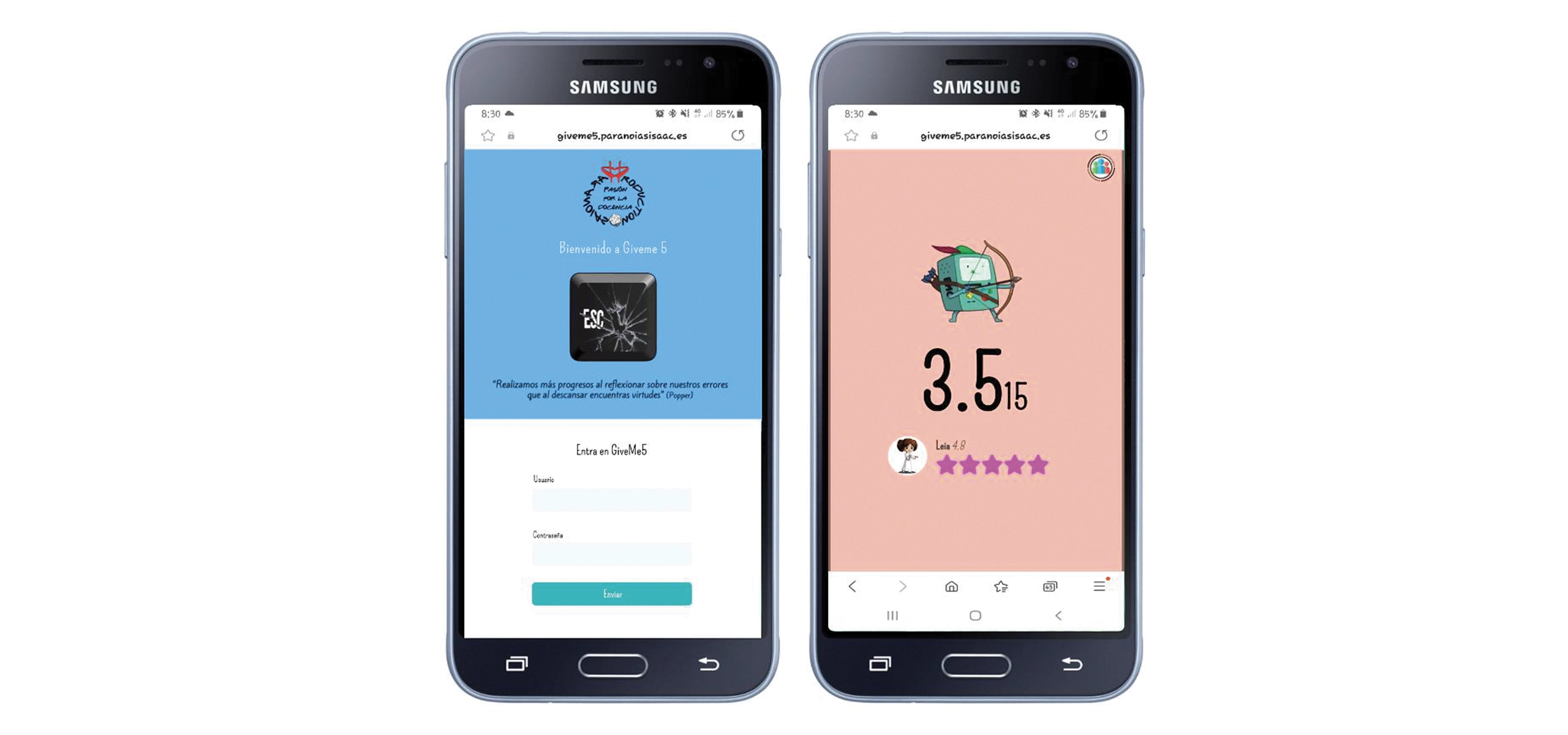
The course content and skills were connected to various episodes of Black Mirror, with each class starting with a clip from an episode to encourage reflection and a subsequent debate among the students. The theme of the project was inspired by the first episode of season three, titled “Nosedive”. This episode presents a world in which social ratings recorded in a mobile application determine status and access to opportunities. In this world, people are continuously rated via their smartphones, with every social interaction rated from one to five stars. To recreate the emotions and feelings experienced in the episode, which is one of the fundamental pillars of gamification according to Model 10-40 (Pérez-López y Navarro-Mateos, 2023), an ad hoc application similar to the one used in the episode was designed for the project (Figure 1). Using their smartphones, students rated their classmates based on the quality of their contributions in class, the presentation of the training challenges they completed, and their interactions with one another (inside and outside the classroom). The ratings were anonymous, meaning that only the recipient could view them. The ratings also impacted the course, as they determined the students’ options for choosing their partner, date, and topic for the practical session they had to prepare; they also provided advantages when completing the educational challenges available to them. As a result, this created a tense, high-pressure atmosphere that tested the group’s emotional skills, promoting emotional regulation and, in many cases, resilience. At the same time, it helped the students become fully immersed in the narrative by faithfully recreating what the protagonists in the episode experienced. Using fiction as a basis for reality, we created a real-life setting in which to develop critical thinking for future transfer to teaching roles. The wide range of situations that arose from the ratings given and received by the participants (and the reasons behind them ) led students to question their appropriateness, as well as the reactions they elicited in their classmates, not only from a theoretical perspective but also through their own personal experience.
Method
Study Design and Sample
This study was framed within the positivist paradigm of research and used a quantitative approach, as it focused on the objective evaluation of an innovative educational intervention targeting critical thinking, resilience, and social and emotional skills (attention to feelings, clarity, and emotional regulation). The study employed a one-group quasi-experimental design with pre- and post-measurements and evaluated the impact of a gamification activity based on the television series Black Mirror, comparing the students’ results before and after the intervention. Quasi-experimental designs are common in action research studies, in real-life classroom settings with a natural, non-randomized group.
The sample included 26 students from the Master’s in Education program (group 3), consisting of 12 women and 14 men. All students were enrolled in the course “Learning and Teaching Physical Education” which is part of the Master’s in Secondary Education, Teaching Training, and Language Teaching (Physical Education concentration) at the University of Granada. The study’s ethical standards were ensured through an approved informed consent process that guaranteed participant confidentiality and anonymity (University of Granada Human Research Ethics Review Committee, approval code 5268/CEIH/2025).
The main objectives of the course included developing the fundamental skills of a physical education teacher; learning and analyzing the curricular elements of physical education; planning and evaluating from a critical perspective; and demonstrating the acquisition of essential practices for developing effective teaching strategies.
Study Variables
Critical thinking
We used the validated Critical Thinking Questionnaire (Zaldívar, 2010), which has demonstrated adequate reliability and internal consistency in the Spanish population (Cronbach’s α = .81). The questionnaire consists of 20 items rated on a Likert scale ranging from 1 (“Never”) to 6 (“Always”). Three well-defined dimensions of critical thinking were derived from the 20 items: recognition of assumptions (taking information as true in view of a future action, as a product of reflection on the environment), evaluation of arguments (distinguishing between the ability to narrate, express, and argue with consistent ideas versus weak arguments, without deviating from the topic when responding), and interpretation (understanding reality based on conclusions drawn beyond reasonable doubt and identifying solutions to problems). The total score was calculated by summing the items within each dimension.
Resilience
The Spanish version of the 10-item Connor-Davidson Resilience Scale (CD-RISC 10) (Connor & Davidson, 2003; Notario-Pacheco et al., 2011) was used to assess university students’ resilience. This questionnaire has demonstrated acceptable reliability (Cronbach’s α = .85) and high internal consistency, with an intraclass correlation test-retest coefficient of .71 when validated in Spanish population (Notario-Pacheco et al., 2011). The questionnaire consists of 10 items rated on a 5-point Likert scale ranging from 0 (“Never”) to 4 (“Almost Always”). The resilience variable was calculated based on the sum of the scores of the 10 items, resulting in a range from 0 to 40 points, with higher score indicating higher levels of resilience.
Emotional intelligence
We used the Spanish version of the Trait Meta-Mood Scale (TMMS) to measure students’ emotional intelligence (Fernandez-Berrocal et al., 2004; Salovey et al., 1995). This questionnaire has been validated in a Spanish sample and has demonstrated adequate reliability and internal consistency (Cronbach’s α = .90). It consists of 24 items rated on a 5-point Likert scale ranging from 1 (“Strongly disagree”) to 5 (“Strongly agree”). The 24 items were divided into 3 dimensions of 8 items each: attention to feelings (the ability to identify and recognize one’s own feelings), clarity of feelings (the ability to understand and clearly describe one’s own feelings), and emotional regulation or repair (the ability to control one’s own emotions, both positive and negative). The scores for each dimension ranged from 8 to 40 points (summatory). For this study, a three-category variable was calculated for each dimension of emotional intelligence, with different cutoff points for women and men. Accordingly, attention to feelings was classified as “low,” “adequate,” or “excessive,” whereas clarity and emotional regulation were each classified as “low,” “adequate,” or “excellent.”
Statistical Analysis
The descriptive characteristics of the sample are presented based on to the pre-intervention measurements and are expressed as means and standard deviations (SDs) for continuous variables and as frequencies and percentages for the categorical variables. Prior to the inferential analyses, the normality of the dependent variables was assessed through visual inspection of histograms and the Kolmogorov-Smirnov test (Lilliefors, 1967). Since the variables followed a normal distribution, Student’s t-test for related samples and the McNemar-Bowker test (Bowker, 1948) were used to examine the effect of the Black Mirror intervention on continuous and categorical variables, respectively.
Specifically, Student’s t-test was used to examine pre- and post-intervention differences in the different dimensions of critical thinking, as well as in resilience. In addition to p values, effect sizes were reported using Cohen’s d to evaluate the practical relevance of the observed changes. According to the conventional criteria (Cohen, 1988), values close to 0.2 indicated a small effect, values around 0.5 indicated a medium effect, and values of 0.8 or higher indicated a large effect.
For the ordinal categorical variables corresponding to the dimensions of emotional intelligence (attention, clarity, and regulation), the McNemar-Bowker test was used to evaluate the pre- and post-intervention changes in the distribution of frequencies across categories (e.g., between low, adequate, and excessive categories for the attention to feelings dimension). All statistical analyses and graphs were performed using RStudio software (v2023.12.1 + R 4.4.3, R Foundation for Statistical Computing, Vienna, Austria).
Results
Table 1 presents the descriptive characteristics of the total sample, segmented by sex. The only dimension that showed a significant difference between sexes (p = .039) in the pre-intervention assessment was emotional clarity, from the emotional intelligence questionnaire.

Table 1
Descriptive characteristics of the total sample segmented by sex from the gamification project based on Black Mirror
Figure 2presents the changes in the dimensions of critical thinking and in overall critical thinking after participating in the Black Mirror-based gamification activity. Student’s t-test analysis for related samples showed meaningful improvements in all dimensions of critical thinking after the intervention, as well as in overall critical thinking (all p <.001). The largest effect size was found for the recognition of assumptions dimension, with students reporting an initial score of 26.7 ± 2.0 which increased to 32.1 ± 3.6 (t = 12.6; p < .001; d = 2.5), and for overall critical thinking, with students reporting an initial score of 73.3±4.82 which increased to 86.4 ± 6.4 (t = 11.8; p < .001; d = 2.3). A large effect size was also observed for the evaluation of arguments dimension (pre-score = 13.8 ± 2.4, post-score = 18.0 ± 2.2; t = 7.6; p < .001; d = 1.5), and for interpretation (pre-score = 12.4 ± 1.6, post-score = 14.6 ± 1.8; t = 4.4; p < .001; d = 0.9). In terms of descriptive statistics, 100% of the students improved their pre- post-intervention scores in the recognition of assumptions dimension and in overall critical thinking, 92.3% (24 out of 26) improved their scores for the evaluation of arguments dimension, as did 70% (18 out of 26) in the interpretation dimension. The item-by-item analysis (Supplementary Figure 2) revealed that, within the recognition of assumptions dimension, the items showing the greatest post-intervention improvement were item 17 (“Sometimes I think about my own thoughts and question them”) and item 15 (“I try to maintain an overall attitude of critical thinking”) with a difference of 1.5 points. These findings suggest that the gamification project based on Black Mirror encouraged the students to adopt a more reflective attitude and to question their own ideas and beliefs, which is a key aspect of self-reflection. In the evaluation of arguments dimension, item 1 (“I question the veracity of opinions that many people accept as true”) and item 5 (“Being objective is ‘cold’; it is better to let your feelings guide you”) showed the greatest improvement (1 point), indicating an increasing tendency among participants to think skeptically and analytically about the information they receive, as well as to prioritize critical reasoning over emotions when making judgments. Finally, in the interpretation dimension, item 3 (“I try to find the truth rather than be right”) showed the greatest change (1 point), indicating that participants shifted toward prioritizing rigorous analysis and openness to new evidence rather than reaffirming their prior opinions.
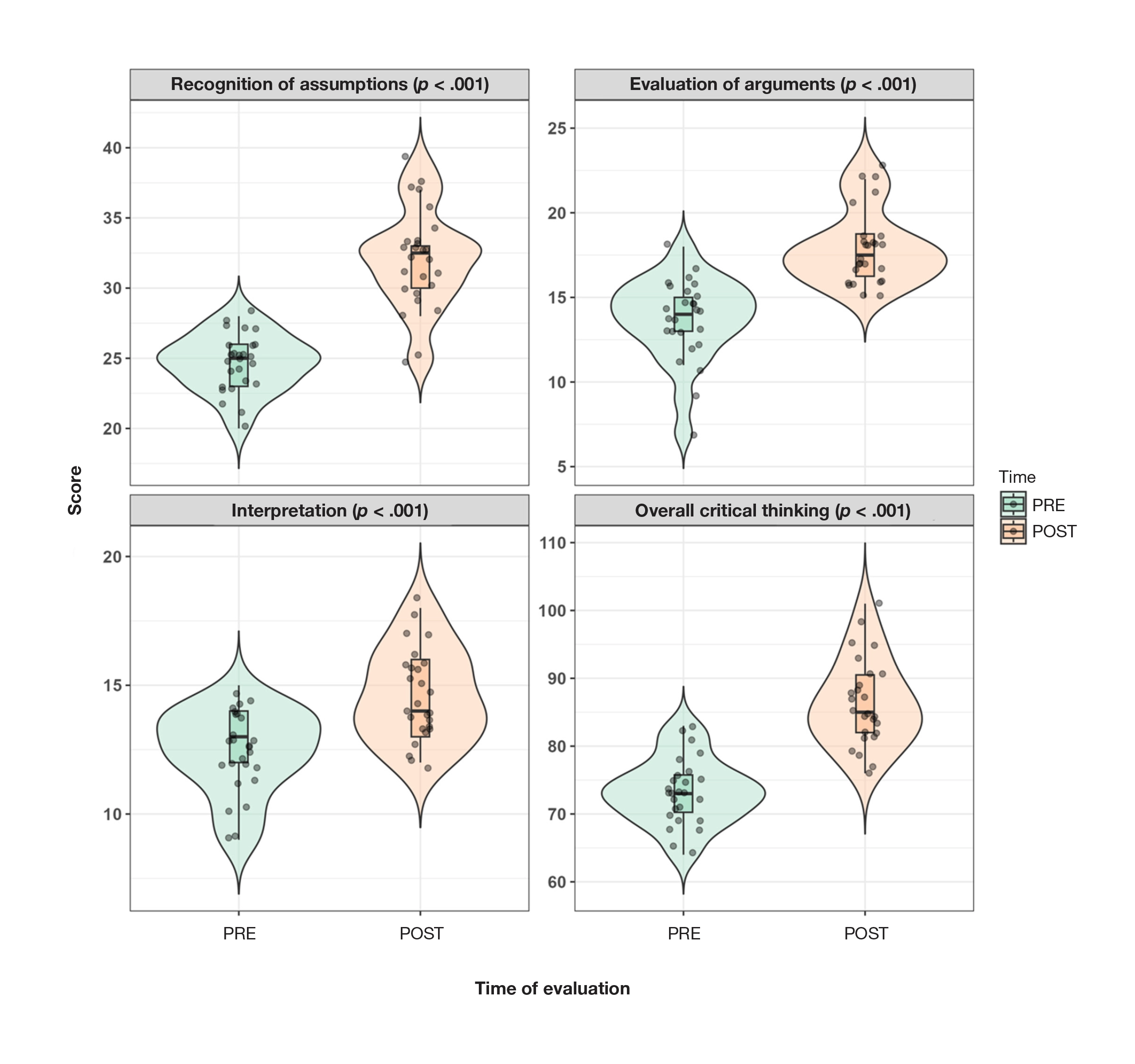
Note.The gray dots represent the individual scores pre- and post-intervention for the dimensions of critical thinking and the overall score. The box indicates the interquartile range, the bold horizontal line represents the median, and the vertical lines (whiskers) represent the minimum and maximum values. The statistical analysis was conducted using Student’s t-test for related samples.
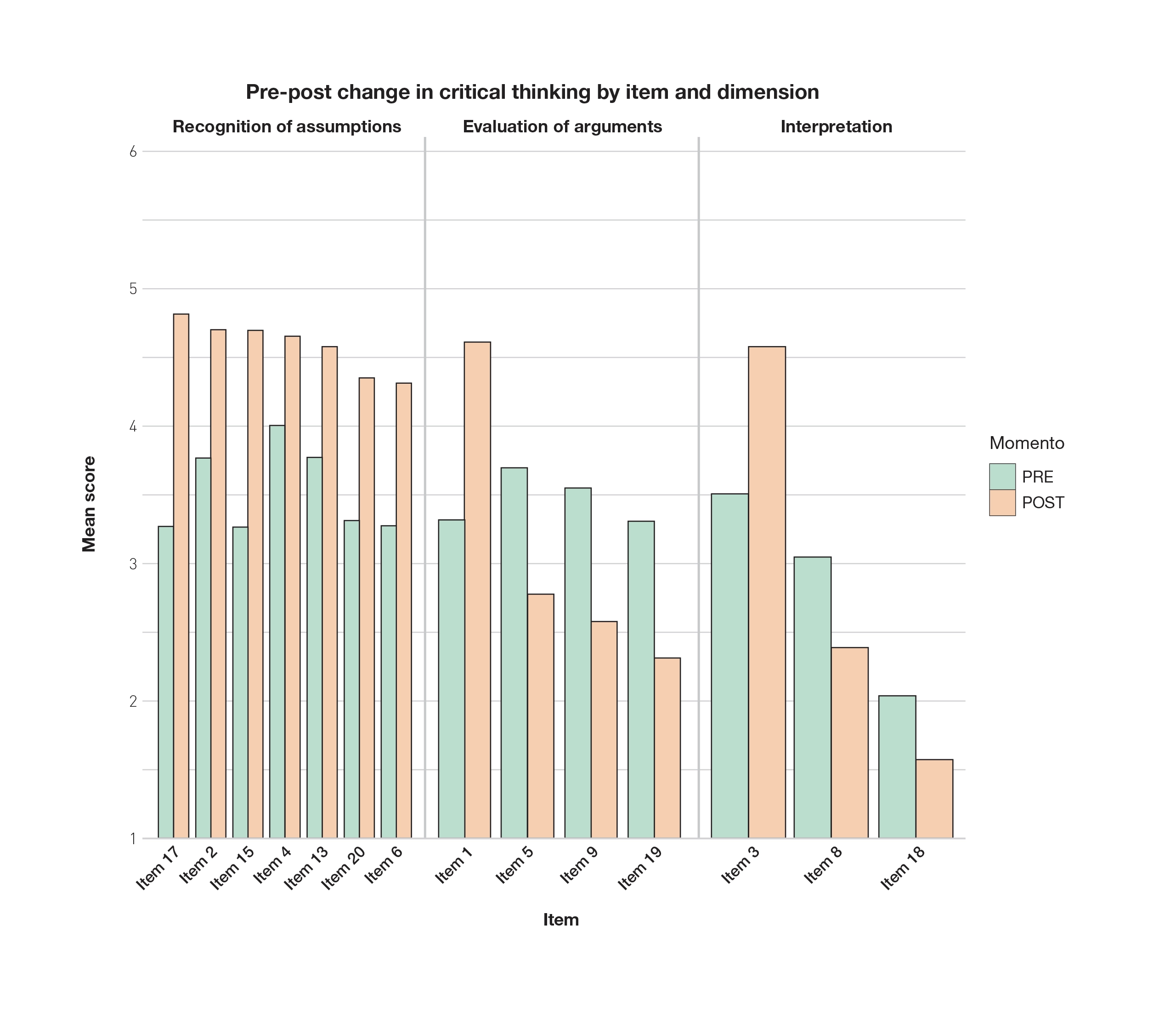
Note.The y axis shows the mean score on a scale from 1 (strongly disagree) to 6 (strongly agree). The items with reversed score were recoded to maintain interpretative coherence.
The projectalso had a significant effect on the students’ reported resilience levels, which increased from 23.6 ± 3.9 before the intervention to 30.5 ± 2.6 after the experience (Figure 3; t = 9.6, p < .001, d = 1.9). Specifically, 96.2% of the students (25 out of 26) improved their initial scores.
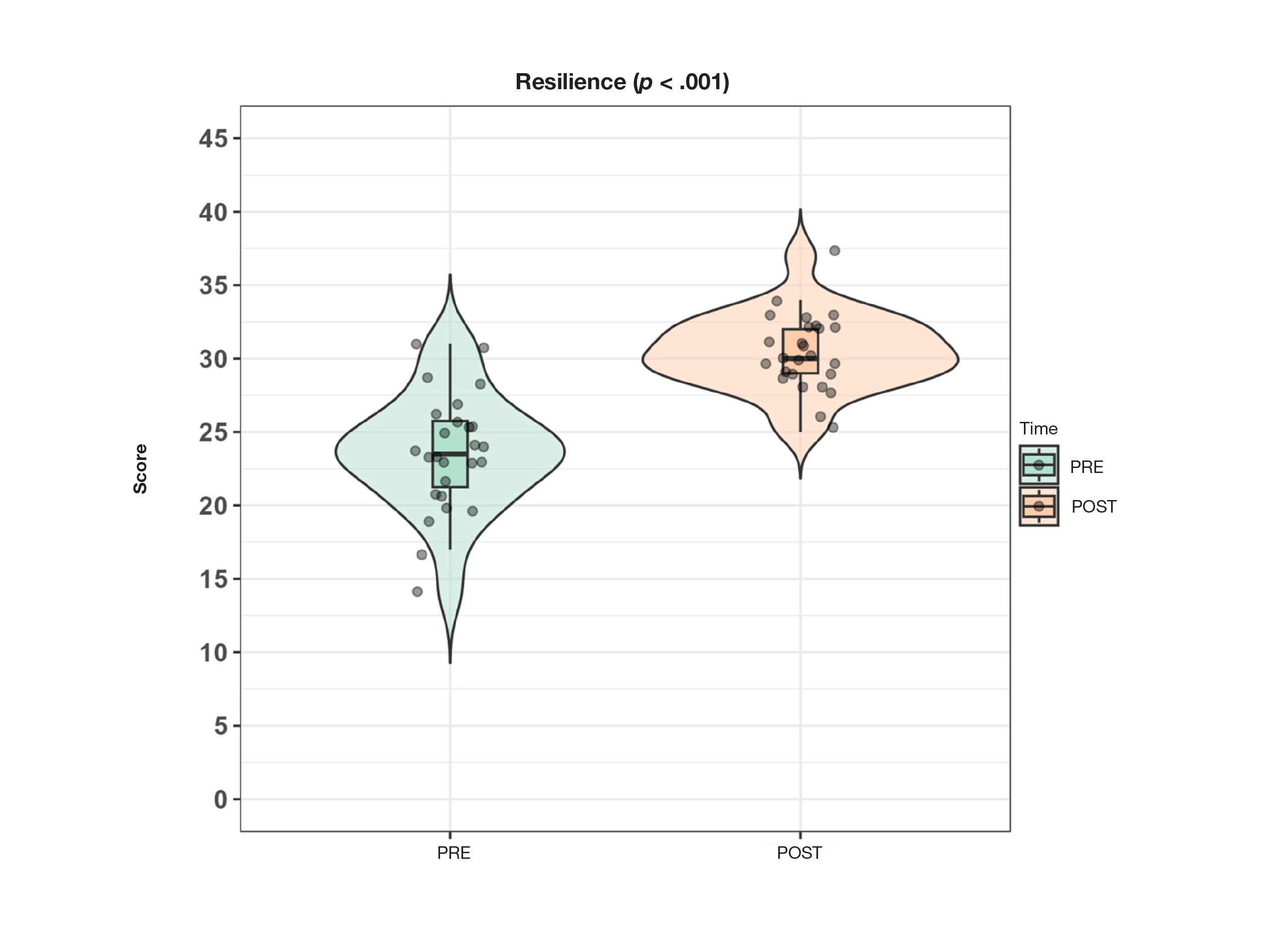
Note.The gray dots represent the individual scores for resilience pre- and post-intervention. The box indicates the interquartile range, the bold horizontal line represents the median, and the vertical lines (whiskers) represent the minimum and maximum values. The statistical analysis was conducted using Student’s t-test for related samples.
In terms of emotional intelligence, the McNemar-Bowker test was used to analyze changes in the distribution of the students’ responses across categories (low, adequate, and excessive/excellent) for each dimension. As shown in Figure 4, the Black Mirror-inspired educational activity had a significant effect on the attention to feelings dimension (McNemar-Bowker χ² = 13.0, p = .005). Specifically, more than half of the students (54%) improved from reporting either low or excessive attention to feelings before the intervention to reporting adequate attention after participation. No significant changes were found across response categories in the clarity and emotional regulation dimensions (both p > .050).
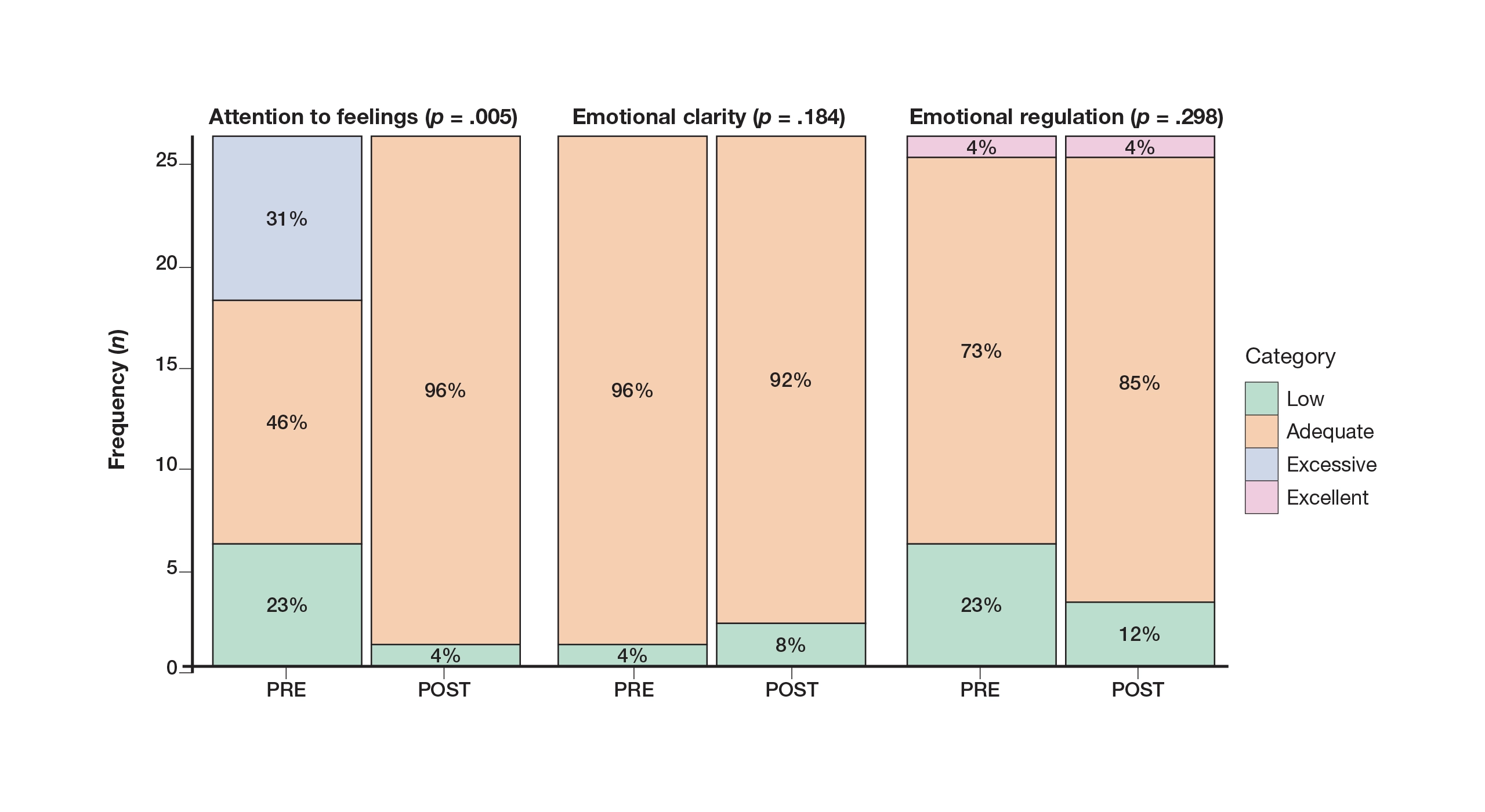
Note.The data are expressed as frequencies (number of cases) and percentages (within each category). We used the McNemar-Bowker test to determine significant changes between response categories that occurred when comparing the pre- and post-intervention evaluations.
Discussion
The results of this study show the significant and positive impact of the Black Mirror-inspired gamification project on critical thinking, resilience, and attention to feelings, all of which are essential competencies in early teacher training and are transferable to their future teaching practice. These findings are consistent with previous research highlighting the value of active methodologies and gamification as high-impact strategies for promoting meaningful changes in behavior and learning (Pérez-López et al., 2024; Navarro-Mateos y Pérez-López, 2024). These results further underscore the enormous potential of such approaches in higher education. A good example of this is an intervention conducted with young adults that reported significant improvements in the group participating in a gamification activity, specifically in interest, inspiration, and engagement, compared with a control group (Kelders et al., 2018). Another example is the study conducted by Navarro-Mateos et al. (2024), in which a Star Wars-inspired gamification intervention improved emotional intelligence, personal initiative, entrepreneurial attitude, and resilience among college students. Although it is important for the narrative to be meaningful to students, technology is another element that may enhance the effectiveness of programs aimed at improving health outcomes. Cobb y Poirier (2014) reported similar findings in their intervention, concluding that technology helped strengthen participants’ connection to and commitment to the project, thereby positively influencing their psychological well-being.
One of the most notable findings of this study was the significant improvement observed across all dimensions of critical thinking after the intervention, as well as in overall critical thinking. The effect size observed for these dimensions suggest not only statistically significant improvements, but also substantial changes in the way students process information and critically examine their own beliefs. Improvements in items such as “I think about my own thoughts and question them” reinforce the hypothesis that the intervention benefits not only cognitive skills, but also critical thinking and reflective capacity, both of which are typically difficult to develop though traditional teaching practices (Bietenbeck, 2014). These attitudinal changes may be associated with greater intrinsic motivation and stronger commitment to learning, which are particularly important for training future teachers (Eales-Reynolds et al., 2013). The development of self-reflection and skepticism is essential in a higher education context characterized by large volumes of information and the need to critically evaluate and filter it (Martínez-Mares & Risco-Lázaro, 2023). Previous research with college students in Spain has shown that individuals with a stronger disposition toward critical thinking also tend to be more receptive to diversity and challenges and to have a stronger creative self-concept, which positively contributes to their self-confidence (Álvarez-Huerta et al., 2022).
Regarding the resilience variable, the results also showed a notable increase in students’ ability to cope with adverse situations post-intervention. This change was observed in 96% of participants and may be explained by the chosen narrative, which exposes the students to complex situations and creates the need to work on their emotional regulation and develop adaptive strategies. These findings are consistent with previous studies that have associated resilience with improvements in academic performance and student engagement (Romano et al., 2021). In higher education specifically, various interventions have shown than an appropriate approach can enhance student resilience and psychological well-being, thereby reducing stress and anxiety levels (You, 2016; van Breda, 2018).
In terms of emotional intelligence, within the attention to feelings dimension, 54% of students adjusted their levels to a more appropriate level of attention to feelings after participating in the intervention. This suggests that the intervention may have fostered greater emotional awareness; however, a longer intervention would be needed to produce significant changes in other dimensions of emotional intelligence, such as clarity or regulation (Paraguay-Delgado & Teves-Quispe, 2024).
Based on these results, the importance of emotional education in teacher training should be emphasized, as it contributes to improving teaching quality and fostering healthier and more empathetic learning environments (Paraguay-Delgado & Teves-Quispe, 2024). Therefore, higher education institutions should develop strategies that expose students to diversity and challenges within a safe environment, with the aim of training active and responsible professionals (Álvarez-Huerta et al., 2022).
Conclusions
The gamification project inspired by the television series Black Mirror and implemented in a Master’s in Education program had a significant and positive impact on the development of key competencies in teacher training, such as critical thinking, resilience, and attention to feelings. The results show improvements across all dimensions of critical thinking, indicating enhanced reflective skills relevant to teaching practice. Likewise, the observed increase in resilience suggests that immersive and emotionally challenging learning experiences, when contextualized within narratives that are meaningful to students, may foster the development of resilience. Regarding emotional intelligence, although significant changes were observed only in the attention to feelings dimension, these findings point to the emerging development of emotional awareness, which could be further enhanced through a longer implementation period.
Overall, the results of this intervention support the impact of gamification, when integrated with fiction and technology, on students’ holistic learning. These findings reinforce the need to strengthen higher education through projects that promote the development of social and emotional skills as well as critical thinking, fostering more resilient educational environments and learning that can be transferred to real-life contexts.
References
[1] Álvarez-Huerta, P., Muela, A., & Larrea, I. (2022). Disposition toward critical thinking and creative confidence beliefs in higher education students: The mediating role of openness to diversity and challenge. Thinking Skills and Creativity, 43, 101003. doi.org/10.1016/j.tsc.2022.101003
[2] American Psychological Association. (2018). Emotional valence. APA Dictionary of Psychology. Available in: dictionary.apa.org/emotional-valence
[3] Bezanilla, M. J., Galindo-Domínguez, H., & Poblete, M. (2021). Importance and possibilities of development of critical thinking in the university: the teacher’s perspective. Multidisciplinary Journal of Educational Research, 11(1), 20–48. doi.org/10.17583/REMIE.0.6159
[4] Bietenbeck, J. (2014). Teaching practices and cognitive skills. Labour Economics, 30, 143–153. doi.org/10.1016/j.labeco.2014.03.002
[5] Bowker, A. H. (1948). A Test for Symmetry in Contingency Tables. Journal of the American Statistical Association, 43(244), 572–574. doi.org/10.1080/01621459.1948.10483284
[6] Browning, M. H. E. M., Larson, L. R., Sharaievska, I., Rigolon, A., McAnirlin, O., Mullenbach, L., Cloutier, S., Vu, T. M., Thomsen, J., Reigner, N., Metcalf, E. C., D’Antonio, A., Helbich, M., Bratman, G. N., & Álvarez, H. O. (2022). Correction: Psychological impacts from COVID-19 among university students: Risk factors across seven states in the United States. PLoS One, 17(8). doi.org/10.1371/journal.pone.0273938
[7] Charles, N. E., Strong, S. J., Burns, L. C., Bullerjahn, M. R., & Serafine, K. M. (2021). Increased mood disorder symptoms, perceived stress, and alcohol use among college students during the COVID-19 pandemic. Psychiatry Research, 296. doi.org/10.1016/j.psychres.2021.113706
[8] Chen, S., & Bonanno, G. A. (2020). Psychological adjustment during the global outbreak of COVID-19: A resilience perspective. Psychological Trauma: Theory, Research, Practice, and Policy, 12, 51–54. dx.doi.org/10.1037/tra0000685
[9] Cobb, N. K., & Poirier, J. (2014). Effectiveness of a Multimodal Online Well-Being Intervention: a Randomized Controlled Trial. American journal of preventive medicine, 46(1), 41–48. doi.org/10.1016/j.amepre.2013.08.018
[10] Cohen, J. (1988). Set Correlation and Contingency Tables. Applied Psychological Measurement, 12(4), 425-434. doi.org/10.1177/014662168801200410
[11] Cole, P. M., Martin, S. E., & Dennis, T. A. (2004). Emotion Regulation as a Scientific Construct: Methodological Challenges and Directions for Child Development Research. Child Development, 75(2), 317–333. doi.org/10.1111/j.1467-8624.2004.00673.x
[12] Connor, K. M., & Davidson, J. R. T. (2003). Development of a new resilience scale: the Connor-Davidson Resilience Scale (CD-RISC).Depression and Anxiety 18(2), 76–82. doi.org/10.1002/da.10113
[13] Eales-Reynolds, L. J., Jones, P., McCreery, E., & Judge, B. (2013). Critical thinking skills for education students. Learning Matters. SAGE Publications Inc.
[14] Fernandez-Berrocal, P., Extremera, N., & Ramos, N. (2004). Validity and Reliability of the Spanish Modified Version of the Trait Meta-Mood Scale. Psychological Reports, 94(3). doi.org/10.2466/pr0.94.3.751-755
[15] Fernández-Martínez, E., Andina-Díaz, E., Fernández-Peña, R., García-López, R., Fulgueiras-Carril, I., & Liébana-Presa, C. (2017). Social Networks, Engagement and Resilience in University Students. International Journal of Environmental Research and Public Health, 14(12), 1488. doi.org/10.3390/ijerph14121488
[16] Gross, J. J. (2015). Emotion Regulation: Current Status and Future Prospects. Psychological Inquiry, 26(1), 1–26. doi.org/10.1080/1047840X.2014.940781
[17] Hailikari, T., Virtanen, V., Vesalainen, M., & Postareff, L. (2022). Student perspectives on how different elements of constructive alignment support active learning. Active Learning in Higher Education, 23(3), 217–231. doi.org/10.1177/1469787421989160
[18] Karakuş, İ. (2024). University students’ cognitive flexibility and critical thinking dispositions. Frontiers in Psychology, 15, 1420272. doi.org/10.3389/fpsyg.2024.1420272
[19] Kelders, S. M., Sommers-Spijkerman, M., & Goldberg, J. (2018). Investigating the Direct Impact of a Gamified Versus Nongamified Well-Being Intervention: An Exploratory Experiment. Journal of Medical Internet Research, 20(7):e247 doi.org/10.2196/jmir.9923
[20] Lilliefors, H. W. (1967). On the Kolmogorov-Smirnov Test for Normality with Mean and Variance Unknown. Journal of the American Statistical Association, 62(318), 399-402. doi.org/10.2307/2283970
[21] Martínez-Mares, S., & Risco-Lázaro, A. (2023). The development of critical thinking as an attitude in higher education: the literary text as educative resource. Revista Complutense de Educación, 34(4), 965–974. doi.org/10.5209/rced.86937
[22] Menéndez, D. (2018). A critical approach to Emotional Intelligence as a dominant discourse in the field of education. Revista Española de Pedagogía, 76(269), 7–23. doi.org/10.22550/REP76-1-2018-01
[23] Muntaner-Guasp, J. J., Pinya Medina, C., & Mut Amengual, B. (2020). El impacto de las metodologías activas en los resultados académicos. Profesorado. Revista de Currículum y Formación de Profesorado, 24(1), 96-114. doi.org/10.30827/profesorado.v24i1.8846
[24] Navarro-Mateos, C., Mora-Gonzalez, J., & Pérez-López, I. J. (2024). The “STAR WARS: The First Jedi” Program—Effects of Gamification on Psychological Well-Being of College Students. Games for Health Journal, 13(2), 65–74. doi.org/10.1089/g4h.2023.0059
[25] Navarro-Mateos, C., & Pérez-López, I. J. (2024). Gamificación: de la curiosidad al aprendizaje a través de la emoción en el máster de profesorado. Revista Electrónica Interuniversitaria de Formación del Profesorado, 27(1), 151–166. doi.org/10.6018/reifop.591631
[26] Notario-Pacheco, B., Solera-Martínez, M., Serrano-Parra, M. D., Bartolomé-Gutiérrez, R., García-Campayo, J., & Martínez-Vizcaíno, V. (2011). Reliability and validity of the Spanish version of the 10-item Connor-Davidson Resilience Scale (10-item CD-RISC) in young adults. Health and Quality of Life Outcomes 9(63), 1–6. doi.org/10.1186/1477-7525-9-63
[27] Paraguay-Delgado, G. C., & Teves-Quispe, J. (2024). Development of emotional competencies in higher education students. Latam: Revista Latinoamericana De Ciencias Sociales y Humanidades, 5(2), 257–266. doi.org/10.56712/latam.v5i2.1873
[28] Peña-Casares, M. J., & Aguaded-Ramírez, E. M. (2019). Evaluación de la Inteligencia Emocional en el alumnado de Educación Primaria y Educación Secundaria. Revista de Educación de la Universidad de Granada, 26, 53-68. doi.org/10.30827/reugra.v26i0.118
[29] Pérez-López, I. J., & Navarro-Mateos, C. (2023). Guía para gamificar. Construye tu propia aventura. Copideporte S.L.
[30] Pérez-López, I. J., Navarro-Mateos, C., & Mora-Gonzalez, J. (2024). Impact of a digital serious game on emotional variables of students of the master’s degree in teaching. Innovations in Education and Teaching International, 62(3), 838–850. doi.org/10.1080/14703297.2024.2377787
[31] Pérez-López, I. J., Navarro-Mateos, C., & Rosa, M. (2025). Gamification to Enhance University Students’ Resilience: Transforming Challenges into Opportunities. Cultura, Ciencia y Deporte, 20(65), 2392. doi.org/10.12800/ccd.v20i65.2392
[32] Rabal-Alonso, J. M. & González-Romero, M. (2023). The influence of emotional intelligence and resilience on the academic performance of aspiring teachers. Revista Internacional Interdisciplinar de Divulgación Científica, 1(1), 245–257. Available in: riidici.com/index.php/home/article/view/25
[33] Raj, T., Chauhan, P., Mehrotra, R., & Sharma, M. (2022). Importance of critical thinking in the education. World Journal of English Language, 12(3), 126–133. doi.org/10.5430/wjel.v12n3p126
[34] Romano, L., Angelini, G., Consiglio, P., & Fiorilli, C. (2021). Academic Resilience and Engagement in High School Students: The Mediating Role of Perceived Teacher Emotional Support. European Journal of Investigation in Health, Psychology and Education, 11(2), 334–344. doi.org/10.3390/ejihpe11020025
[35] Salovey, P., Mayer, J. D., Goldman, S. L., Turvey, C., & Palfai, T. P. (1995). Emotional attention, clarity, and repair: Exploring emotional intelligence using the Trait Meta-Mood Scale. In J. W. Pennebaker (Ed.), Emotion, disclosure, & health (pp. 125–154). American Psychological Association. doi.org/10.1037/10182-006
[36] Valverde-Janer, M., Ortega-Caballero, M., Ortega-Caballero, I., Ortega-Caballero, A., & Segura-Robles, A. (2023). Study of Factors Associated with the Development of Emotional Intelligence and Resilience in University Students. Education Sciences, 13(3), 255. doi.org/10.3390/educsci13030255
[37] van Breda, A. D. (2018). Resilience of vulnerable students transitioning into a South African university. Higher education, 75, 1109–1124. doi.org/10.1007/s10734-017-0188-z
[38] Thinking Dispositions and Attitudes Towards Socioscientific Issues. E-International Journal of Educational Research, 13(1), 203–219. doi.org/10.19160/e-ijer.1054393
[39] Yilmaz, A., & Salman, M. (2022). Investigation of the Relationship Between Pre-service Teachers’ Critical You, J. W. (2016). The relationship among college students’ psychological capital, learning empowerment, and engagement. Learning and Individual Differences, 49, 17–24. doi.org/10.1016/j.lindif.2016.05.001
[40] Zaldívar, P. J. L. (2010). El constructo pensamiento crítico: Universidad de Zaragoza. Available in: www.yumpu.com/es/document/read/13031876/2010-el-constructopensamiento-critico-universidad-de-zaragoza.
ISSN: 2014-0983
Received: July 6, 2025
Accepted: January 26, 2026
Published: July 1, 2026
Editor: © Generalitat de Catalunya Departament de la Presidència Institut Nacional d’Educació Física de Catalunya (INEFC)
© Copyright Generalitat de Catalunya (INEFC). This article is available from url https://www.revista-apunts.com/. This work is licensed under a Creative Commons Attribution-NonCommercial-NoDerivatives 4.0 International License. The images or other third party material in this article are included in the article’s Creative Commons license, unless indicated otherwise in the credit line; if the material is not included under the Creative Commons license, users will need to obtain permission from the license holder to reproduce the material. To view a copy of this license, visit https://creativecommons.org/licenses/by-nc-nd/4.0/deed.en


