Fostering Sustainable Mobility in Higher Education: Design and Evaluation of a Bicycle Promotion Intervention
Isabel María Martín-López

Pere Antoni Borràs
Antoni Aguiló
Olalla García-Taibo
*Corresponding author: Olalla García-Taibo olalla.garcia@uib.es
Cite this article
Martín-López, I. M., Borràs, P. A., Aguiló, A., & García-Taibo, O. (2026). Fostering sustainable mobility in higher education: Design and evaluation of a bicycle promotion intervention. Apunts. Educación Física y Deportes, 166, 10-19. https://doi.org/10.5672/apunts.2014-0983.es.2026.166.02
Abstract
Active commuting offers health, social, and environmental benefits, yet remains uncommon in university settings. This study evaluated the effects of a three-month bicycle promotion intervention using a mobile app and gamified elements on bicycle commuting behavior and physical activity levels among university students and staff. A quasi-experimental pre–post design with self-selection into groups was applied, including an experimental group (n = 27) that participated in the app-based intervention, and a control group (n = 25). Both groups completed pre- and post-intervention questionnaires on commuting behavior and physical activity levels. Results showed a significant increase in bicycle commuting within the experimental group (55.6% to 77.8%; p = .031) and in vigorous physical activity (p = .015), with no meaningful changes in the control group. However, no clear improvements were found in overall physical activity levels, and baseline differences between groups limit causal interpretations. These findings suggest that gamified interventions may represent a promising strategy for promoting sustainable mobility in university settings, although their impact on overall physical activity is modest and may depend on contextual and environmental factors.
Introduction
Promoting active commuting has garnered increasing attention as a strategy to address multiple global challenges, including physical inactivity, environmental degradation, and urban congestion (United Nations, 2021). Active commuting, primarily through walking or cycling, refers to commuting to work, school, or other destinations using non-motorized modes of transportation (Ogilvie et al., 2012). It has been associated with higher physical activity levels (PALs) and improved fitness (Henriques-Neto et al., 2020), which largely explain its related health benefits (Laeremans et al., 2017). Studies link active commuting with reduced mortality, lower incidence of cardiovascular disease, cancer, type 2 diabetes, overweight, and obesity (Dinu et al., 2019). Bicycle commuting is also associated with perceived health, well-being, fitness, and productivity (Henriques-Neto et al., 2020). Beyond individual benefits, it contributes to societal goals such as reducing pollution and greenhouse gas emissions, aligning with Sustainable Development Goals (SDGs) 3, 4, 11, and 13 (United Nations, 2015).
Despite its advantages, bicycle commuting remains uncommon: in Spain, only 3.5% commute daily by bicycle (GESOP, 2019), with car and public transport dominating university settings (Barranco-Ruiz et al., 2019; Chillón et al., 2016). Promoting cycling requires understanding determinants that vary across populations and contexts (Rowe et al., 2013), including personal, social, cultural, and environmental factors (Hermida et al., 2024; Ruiz-Hermosa et al., 2021). The COVID-19 pandemic also reshaped commuting habits (Buehler & Pucher, 2021). The effectiveness of bicycle promotion interventions depends not only on individual motivation but also on supportive infrastructure and institutional conditions. In this context, app-based strategies may be more effective when cycling is safe, feasible, and locally supported (Roaf et al., 2024).
Universities can act as agents of behavioral and environmental change by embedding sustainability into their operations and promoting active commuting through programs, biking schemes, apps, and sharing initiatives (Bopp et al., 2018; Molina-García et al., 2015). Yet, such measures often lack systematic evaluation. Incorporating Behavior Change Techniques (BCTs) can enhance their effectiveness (Michie et al., 2015). In bicycle promotion, effective BCTs include behavior monitoring, environmental restructuring, and infrastructure improvements (Doğru et al., 2021). Many of these techniques are incorporated in gamified interventions (Cugelman, 2013; Deterding et al., 2011), which use elements such as goals, challenges, rewards, leaderboards, and feedback (Wang et al., 2022; Xu et al., 2022). Evidence supports the use of gamification to promote active commuting and increase PALs (Laeremans et al., 2017; Mildestvedt et al., 2020; Xu et al., 2022).
Several universities have implemented common gamification elements in their mobility initiatives to promote sustainable transport, such as the “European University Tournament on Sustainable Mobility” (U-MOB, 2019) or the “TrafficO2” project (Di Dio et al., 2018), although evidence regarding their effectiveness remains limited. In Spain, several universities have used the Ciclogreen app to promote sustainable commuting behaviors. Launched in 2014 and awarded the Gold Medal for Sustainable Mobility by the Spanish Ministry of the Agriculture an Fisheries, Food and Environment in 2017, the app aims to promote sustainable commuting (by bicycle, walking, public transport, carpooling, or electric scooter) through a system that converts kilometers travelled into points to achieve challenges and rewards, using both web and mobile technology. According to the Ciclogreen official website (http://ciclogreen.com) more than 50 organizations, including numerous Spanish universities, have used the app to promote sustainable commuting and reduce their carbon footprint, although no peer-reviewed studies have been identified to date. Based on this background and the identified research gaps, the present study aimed to evaluate the effects of a three-month bicycle promotion intervention using a mobile app and gamified elements on bicycle commuting behavior and PALs among university students and staff, as well as to assess participants’ perceptions and engagement with the intervention.
Materials and Methods
Study Design
This quasi-experimental study with self-selection bias was conducted within a broader initiative to promote active transportation, implemented by the Healthy and Sustainable University Office at the University of the Balearic Islands during the 2020–2021 academic year. The initiative included two main phases: (1) a diagnostic assessment of commuting patterns and determinants of bicycle use (Martín-López et al., 2025), and (2) the design, implementation, and evaluation of a three-month intervention using a mobile app and gamified elements. A two-group pre-post design was applied. Participants were not randomly assigned but instead selected their preferred group, resulting in a self-selection process. The experimental group (EG, n = 27) used the app and completed online questionnaires before and after the intervention, whereas the control group (CG, n = 25) completed the same questionnaires without receiving the intervention. This allocation procedure reflects the ecological and voluntary nature of the intervention but introduces potential baseline differences between groups and limits the ability to draw causal inferences from the observed effects.
Study Settings and Sample
The study was conducted on the main campus of a public university located in a peri-urban area, approximately 7–8 km from the city center. The campus is accessible by public transportation (bus, train, metro), private vehicles, and personal bicycles, with a dedicated bike lane connecting it to the city. Parking facilities and changing rooms are available, although at the time of the study there was no municipal bicycle-sharing station or bicycle loan service on campus.
The university community included approximately 13,500 students, 1,000 academic staff, and 600 administrative and service personnel. A total of 52 volunteers were recruited by convenience sampling. Upon signing informed consent, participants indicated their preference to join either the experimental group (EG, n = 27), which involved the use of the app, or the control group (CG, n = 25), which did not. The EG comprised 44.4% women and 55.6% men, with a mean age of 31.0 ± 9.2 years; 37.0% were students (n = 10) and 63.0% were staff (n = 11 professors, n = 6 administrative and service personnel). The CG comprised 64.0% women and 36.0% men, with a mean age of 30.1 ± 10.9 years; 42.3% were students (n = 12) and 57.7% were staff (n = 4 professors, n = 9 administrative and service personnel). Given the small subgroup sizes, professors and administrative personnel were analyzed together as staff. The study protocol was approved by the Research Ethics Committee of the University of the Balearic Islands (Approval Code: 172CER20; February 11, 2021). Participation was voluntary and based on informed consent.
Instruments and Measures
Data were collected at baseline (February–March 2021) and post-intervention (June 2021) through: (1) an online questionnaire, and (2) the Ciclogreen app (EG only).
Online questionnaire
At baseline, all participants completed an ad hoc self-administered questionnaire (Google Forms, 15–20 min), including validated instruments and adapted items tailored to the university context. It comprised the following sections:
- Sociodemographic: gender, age, university role, residence, car and bicycle ownership, and self-rated health status.
- Commuting behavior: regular and university-specific travel patterns, assessed using the validated Modes of Commuting to University Questionnaire (MODU; Palma-Leal et al., 2020).
- Purpose of bicycle use: categorized as non-cyclists, commuters, leisure cyclists, or competitive cyclists (Rowe et al., 2013).
- Frequency of bicycle use: almost daily, 3–4 times per week, 1–2 times per week, weekends only, occasionally, or not at all.
- Intention to commute by bicycle: both general and university-specific.
- Physical activity levels (PALs): measured using the International Physical Activity Questionnaire-Short Form (IPAQ-SF; Cancela et al., 2019).
Ciclogreen app
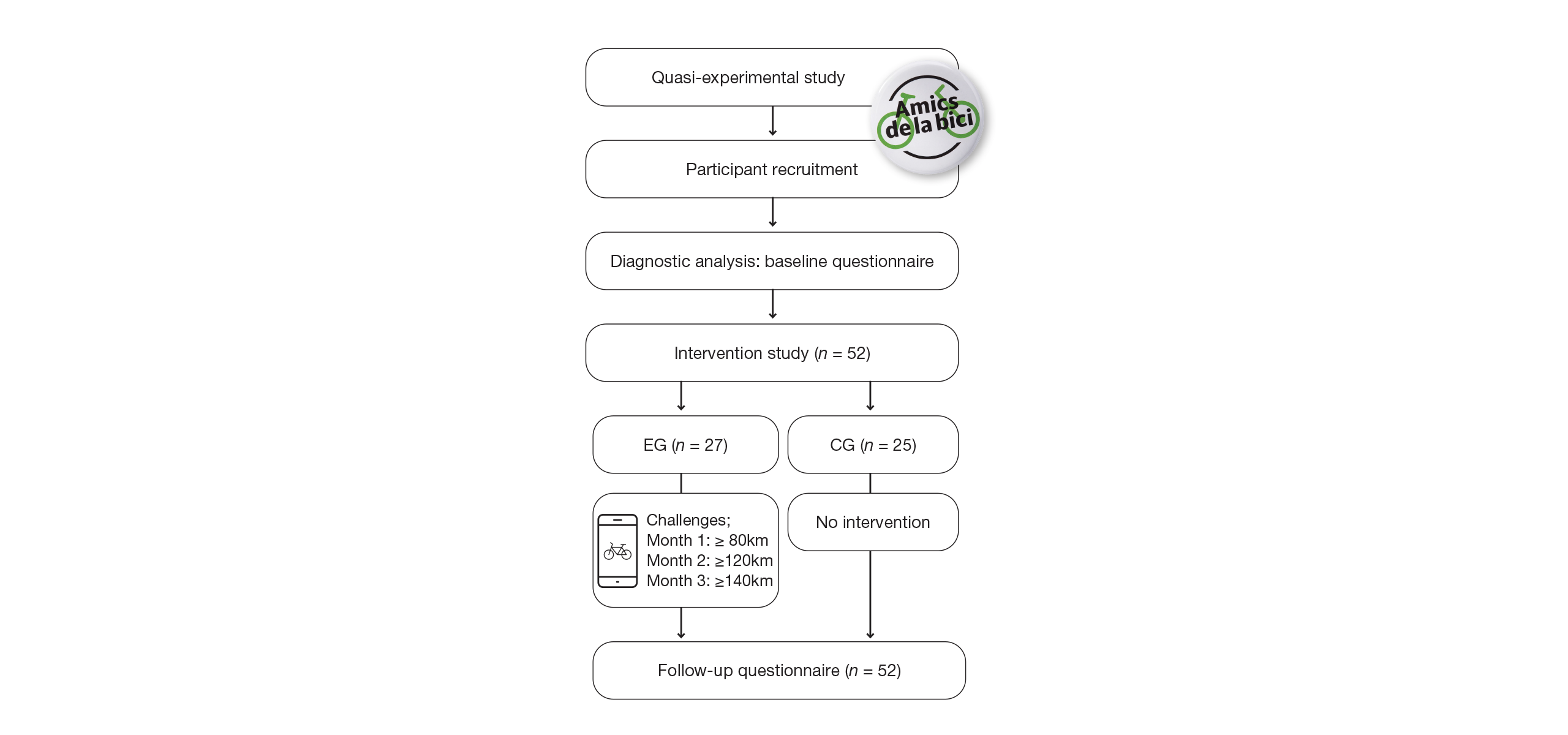
For this intervention, a three-month license of the Ciclogreen app was acquired and customized with the university’s visual identity and a distinctive program icon (Figure 1). EG participants downloaded the app using a unique password provided by the research team and accessed both the mobile and web interfaces. The intervention incorporated five BCTs aligned with gamification elements:
- Goal setting. Participants committed to the primary goal of increasing bicycle use for commuting and other daily trips, using conventional or electric bicycles.
- Graded challenges. Three monthly distance goals: 80 km (March), 120 km (April), 140 km (May), accumulated and distributed according to personal circumstances.
- Rewards and reinforcement. Challenge completers entered a €50 prize draw; those completing all challenges received an extra prize and a cycling kit. Rewards were both extrinsic and intrinsic (achievement, enjoyment).
- Social comparison. Real-time rankings by subgroup (students, administrative staff, academic staff).
- Performance feedback. Immediate trip data (e.g., distance, time, calories, CO2 saved). Only distance was analyzed to verify challenge completion.
Procedure
Recruitment was carried out through a university-wide communication campaign (newsletters, websites, social media, and in-person channels), supported by a coherent visual identity. Recruitment strategies included an information booth alongside a bicycle exhibit, a raffle for a folding bicycle, and brief in-class presentations (20 min) delivered by several faculty members to encourage voluntary participation. Enrolment was completed via an online form, with participants providing informed consent. Both groups completed the baseline questionnaire (February–March 2021) and post-intervention questionnaire (June 2021). The EG used the Ciclogreen app for three months and received weekly emails containing information on the health and environmental benefits of cycling, recognition of challenge completion, and announcements of prize draw winners. The CG received no intervention during this period (Figure 1).
Statistical Analyses
Data were analyzed using IBM SPSS Statistics, version 29.0.1.0 (171). Descriptive statistics were used to summarize participant characteristics and study variables, with frequencies and percentages for categorical data and means, and standard deviations (SD) for continuous data. Normality of continuous variables was assessed using the Shapiro–Wilk test. Given that most continuous variables were not normally distributed, non-parametric tests were applied. Between-group differences at baseline were analyzed using chi-square tests for categorical variables and Mann–Whitney U tests for continuous variables. Several variables originally collected as multi-category or ordinal items were recoded to facilitate analysis and interpretation. Specifically, commuting modes were classified as active (walking, cycling) or passive (car, motorcycle, public transport, scooter, or mixed passive modes), bicycle use purpose was dichotomized into bicycle commuters (commuters) and non-bicycle commuters (non-users, leisure and competitive cyclists), and frequency of bicycle usage was recoded into two categories: high frequency (≥3 times/week) and low or no usage (<3 times/week), based on previously established thresholds (e.g., Ek et al., 2020). To assess within-group changes from pre- to post-intervention, McNemar tests were used for paired categorical variables, and Wilcoxon signed-rank tests were used for paired continuous variables. Given the small sample size, baseline differences between groups, and the self-selection of participants into the experimental and control groups, the analysis primarily focused on within-group comparisons. This approach was considered more appropriate to explore changes over time within each group while minimizing bias derived from non-equivalent baseline characteristics. Effect sizes were calculated for continuous variables using Cohen’s d, interpreted as small (d ≥ 0.2), medium (d ≥ 0.5), and large (d ≥ 0.8). Additionally, absolute changes (Δ) from baseline to follow-up were reported for each outcome. A post hoc power analysis was conducted using G*Power (Faul et al., 2007), targeting 80% power at an alpha level of .05, to determine the minimum sample size required to detect the observed effect sizes. Statistical significance was set at p < .05.
Results
Sample Characteristics and Baseline Comparisons
Table 1 summarizes baseline characteristics of participants. No significant differences were observed between groups in age, gender, university role, residential environment, car ownership, self-rated health, or PALs (p > .05). By contrast, the EG showed significantly higher bicycle ownership (96.3% vs. 72%; p = .01) and greater engagement in active commuting modes (81.5% vs. 40%; p = .002). Bicycle commuting was also more prevalent in the EG (55.6% vs. 8%; p < .001), with higher frequency across all commuting categories (p < .001). These differences reflect baseline imbalances due to the non-randomized allocation and participants’ self-selection into groups.

Table 1
Baseline characteristics of participants in the experimental group (EG) and control group (CG)
Intervention Effects
Table 2 presents the pre- and post-intervention outcomes. In the EG, the proportion commuting by bicycle increased significantly (from 55.6% to 77.8%; p = .031), with positive but non-significant trends for active commuting to the university and frequent cycling (≥3/week). Intentions to cycle remained stable in the EG but rose slightly in the CG, though without statistical significance.
Table 2
Pre- and post-intervention outcomes for the experimental group (EG) and control group (CG)
For PALs, total METs, and sedentary time declined slightly in both groups. A significant increase in vigorous PA was observed in the EG (p = .015, d = 0.41), while moderate PA increased in the CG (p = .018, d = 0.55). Walking decreased substantially in both groups (EG: d = –1.00; CG: d = –0.93). Sedentary time fell significantly in the CG (–0.9 h/day, p = .025) but showed no meaningful change in the EG.
Post hoc Power Analysis
A post hoc analysis indicated that a minimum of 117 participants would have been required to detect the observed effect size for bicycle use (OR = 0.36) with 80% power (α = .05).
Discussion
This study aimed to evaluate the effects of a three-month bicycle commuting promotion intervention using a mobile app and gamified elements on bicycle commuting behavior and PALs among university students and staff. While the intervention was associated with positive trends in bicycle commuting within the EG, the overall effects were modest and should be interpreted cautiously. The absence of between-group analyses, together with baseline differences and the self-selection of participants, limits the extent to which these changes can be attributed to the intervention.
Baseline findings showed a low prevalence of bicycle commuting, consistent with previous studies in university settings (Barranco-Ruiz et al., 2019; Chillón et al., 2016). The intervention produced modest changes in commuting and no significant overall effects on PALs, but provides insights into the challenges and potential of gamified approaches in higher education.
Effects on Commuting Behavior
The intervention promoted positive trends in bicycle commuting, particularly among participants who actively engaged with the program. Although no statistically significant within-group changes were detected, these results are consistent with other university-based gamified interventions, which reported small improvements even without environmental changes (Di Dio et al., 2018; U-MOB, 2019). Structural barriers —such as campus location, distance from residences, terrain, or limited cycling infrastructure— likely constrained behavior change (Piatkowski et al., 2015). Many participants lived beyond a feasible cycling radius, limiting adherence regardless of motivation.
Thus, environmental factors should be taken into account when planning strategies to promote active mobility.
Our findings also point to ceiling effects, as the EG already exhibited higher baseline bicycle use. When participants are already predisposed, further increases are harder to achieve. This pattern has been described in other interventions using gamified or reward-based approaches (Bopp et al., 2018). Future interventions may benefit from tailoring digital strategies to address individual barriers and motivational profiles rather than relying only on general gamified elements.
Intention to bicycle commute was already high in the EG, leaving little scope for change. According to the Theory of Planned Behavior (Ajzen, 1991), intention is a key predictor of behavior, but practical barriers —distance, heavy materials, or concerns about appearance— may prevent the translation of intention into action. This may explain why intention to cycle to university was lower than general cycling intention, a discrepancy also noted in earlier studies (Milkovic & Štambuk, 2015). Broadening gamified challenges beyond commuting to include daily errands may help engage those for whom university travel by bicycle is impractical.
Finally, although this study recorded self-reported bicycle use purpose, the app did not differentiate trip types. Given that some participants may have cycled primarily to accumulate kilometers for rewards, future work should consider tracking purpose to improve data interpretability and optimize motivational strategies.
Effects on Physical Activity Levels
The intervention did not lead to an overall increase in PALs. Although VPA increased significantly in the EG, this was offset by a marked reduction in walking-related METs in both groups, resulting in a net decline in total PALs. This paradoxical pattern may be partially explained by a substitution effect, whereby participants replaced longer habitual walking commutes with shorter bicycle trips. This finding is consistent with previous research suggesting that increases in one form of active transport do not necessarily translate into higher overall physical activity levels, particularly when one active behavior displaces another (Mildestvedt et al., 2020; Xu et al., 2022). In the present study, cycling may have partially replaced longer walking commutes or other low-intensity activities, leading to a redistribution rather than an increase in total PA.
Interventions aimed at promoting active commuting should not assume additive effects on PA but rather consider potential behavioral trade-offs between different activity domains. Designing strategies that complement, rather than replace, existing active behaviors may be necessary to achieve meaningful increases in overall PALs.
Unexpectedly, the CG also showed a modest PALs increase, possibly due to uncontrolled contextual factors (seasonal variation, academic calendar, or personal routines). The quasi-experimental design and small sample make such influences plausible. Baseline activity levels were already high, limiting potential improvements and contributing to ceiling effects. Molina-García et al. (2015) also reported that students in advanced stages of behavior change did not experience major increases in activity levels after using a shared bike system, supporting this interpretation. It is also important to consider that PA was assessed through self-reported questionnaires, which are prone to recall and social desirability biases and may not accurately detect nuanced behavioral changes. Nevertheless, the increase in VPA observed in the EG suggests that gamified elements may be effective in encouraging higher-intensity PA in certain subgroups. Future studies should employ objective measurements and stratified analyses to better understand the domain-specific effects of active commuting interventions on PA behavior.
Strengths and Limitations
This study highlights the potential of gamified elements to foster healthier and more sustainable commuting in higher education. A key strength lies in its ecological validity, as the intervention was implemented in a real university context with institutional support and a commercial platform, providing practical insights for future applications.
Nonetheless, several limitations should be considered. The small and self-selected sample reduced statistical power and introduced baseline differences between groups, limiting generalizability of the findings. In particular, the self-selection of participants into the experimental or control group likely resulted in a more motivated and predisposed profile in the intervention group, which may have contributed to the observed changes independently of the intervention itself. Consequently, the results should be interpreted with caution, as causal inferences cannot be established. Similarly, the statistical approach relied primarily on within-group comparisons, and no group-by-time interaction analyses were conducted. Therefore, it is not possible to determine whether the observed changes differed significantly between the experimental and control groups, further limiting causal interpretation.
Recruitment proved challenging due to the low prevalence of regular bicycle commuters. Additionally, external factors such as weather conditions, academic workload, and infrastructure availability could not be controlled and may have influenced behavior. The reliance on self-reported PA measures (IPAQ-SF) may have introduced recall and social desirability biases. Finally, the observed reduction in walking alongside increased cycling suggests a possible substitution effect, which complicates the interpretation of overall changes in physical activity levels. Future studies should include larger and more representative university samples to improve statistical power and strengthen the generalizability of the findings.
Conclusion
The three-month intervention delivered through a mobile app with gamified elements led to positive trends in bicycle use and active commuting, although its overall impact on PALs was modest. Despite limitations in sample size and study design, these findings add to the emerging evidence supporting gamification and Behavior Change Techniques as promising strategies to encourage active commuting in higher education. This study underscores the potential of such interventions to promote healthier lifestyles and advance sustainability goals while also providing evidence to guide campus mobility policies. Future studies should aim to recruit larger and more diverse samples, apply objective measures (e.g., accelerometry or GPS), and refine incentive structures while isolating specific gamification components to clarify their role.
Acknowledgments
The authors sincerely thank all participants for their time and valuable contributions to this study.
Funding
This work was supported by the Council of Social Affairs and Sport of the Balearic Islands for the project on the promotion of physical activity developed at the University of the Balearic Islands during the 2019–2020 academic year.
Author Contributions
Conceptualization, I.M.M.-L. and O.G.-T.; methodology, I.M.M.-L., P.A.B. and A.A.; investigation, I.M.M.-L.; resources, A.A. and P.A.B.; data analysis, I.M.M.-L.; writing—original draft, I.M.M.-L.; writing—review and editing, I.M.M.-L., O.G.-T., P.A.B and A.A.; supervision, O.G.-T., A.A., and P.A.B.; project administration, A.A and P.A.B. ; funding acquisition, A.A.
Policy and Ethics
The study was conducted in accordance with the principles of the Declaration of Helsinki. Ethical approval was granted by the Research Ethics Committee of University of the Balearic Islands (Approval Code: 172CER20, February 11, 2021). Participation was voluntary, and informed consent was obtained from all participants.
Data Availability Statement
The data that support the findings of this study are available from the corresponding author upon reasonable request.
Conflict of interest
No conflict of interest was reported by the authors.
References
[1] Ajzen, I. (1991). The theory of planned behavior. Organizational Behavior and Human Decision Processes, 50(2), 179–211. doi.org/10.1016/0749–5978(91)90020-T
[2] Barranco-Ruiz, Y., León, C. C., Villa-González, E., Leal, X. P., Chillón, P., & Rodríguez-Rodríguez, F. (2019). Active commuting to university and its association with sociodemographic factors and physical activity levels in Chilean students. Medicina, 55(5), 152. doi.org/10.3390/medicina55050152.
[3] Bopp, M., Sims, D., Matthews, S. A., Rovniak, L. S., Poole, E., & Colgan, J. (2018). Development, implementation, and evaluation of active lions: a campaign to promote active travel to a university campus. American Journal of Health Promotion, 32(3), 536–545. doi.org/10.1177/0890117117694287
[4] Buehler, R., & Pucher, J. (2021). COVID-19 impacts on cycling, 2019–2020. Transport Reviews, 41(4), 393–400. doi.org/10.1080/01441647.2021.1914900
[5] Cancela, J. M., Ayán, C., Vila, H., Gutiérrez, J. M., & Gutiérrez-Santiago, A. (2019). Construct validity of the international physical activity questionnaire in Spanish university students. Revista Iberoamericana de Diagnóstico y Evaluación – e Avaliação Psicológica, 52(3), 5–14. doi.org/10.21865/RIDEP52.3.01
[6] Chillón, P., Molina-García, J., Castillo, I., & Queralt, A. (2016). What distance do university students walk and bike daily to class in Spain? Journal of Transport & Health, 3(3), 315–320. doi.org/10.1016/j.jth.2016.06.001
[7] Cugelman, B. (2013). Gamification: What it is and why it matters to digital health behavior change developers. JMIR Serious Games, 1(1), e3. doi.org/10.2196/games.3139
[8] Deterding, S., Khaled, R., Nacke, L. E., & Dixon, D. (2011). Gamification: Toward a definition. In CHI 2011 Workshop on Gamification (pp. 12–15).
[9] Di Dio, S., Gennusa, M., Peri, G., Rizzo, G., & Vinci, I. (2018). Involving people in the building up of smart and sustainable cities: How to influence commuters' behaviors through a mobile app game. Sustainable Cities and Society, 42, 325–336. doi.org/10.1016/j.scs.2018.07.021
[10] Dinu, M., Pagliai, G., Macchi, C., & Sofi, F. (2019). Active commuting and multiple health outcomes: A systematic review and meta-analysis. Sports Medicine, 49, 437–452. doi.org/10.1007/s40279-018–1023-0
[11] Doğru, D., Mees, H. L. P., Fahri, D., & van den Berg, A. E. (2021). Cycling behavior change interventions: A systematic review. Transport Reviews, 41(6), 733–755.
[12] Ek, A., Alexandrou, C., Söderström, E., Bergman, P., Delisle Nyström, C., Direito, A., & Eriksson, U. (2020). Effectiveness of a 3-month mobile phone–based behavior change program on active transportation and physical activity in adults: Randomized controlled trial. JMIR mHealth and uHealth, 8(6), e18531. doi.org/10.2196/18531
[13] Faul, F., Erdfelder, E., Lang, A.-G., & Buchner, A. (2007). G*Power 3: A flexible statistical power analysis program for the social, behavioral, and biomedical sciences. Behavior Research Methods, 39, 175–191. doi.org/10.3758/BF03193146
[14] Gabinet d'Estudis Socials i Opinió Pública (GESOP). (2019). Barómetro de la bicicleta en España. Informe de resultados noviembre 2019. www.ciudadesporlabicicleta.org/wp-content/uploads/2019/12/RCxB-Bar%C3%B3metro-de-la-Bicicleta-2019.pdf
[15] Henriques-Neto, D., Peralta, M., Garradas, S., Pelegrini, A., Pinto, A. A., Sánchez-Miguel, P. A., & Marques, A. (2020). Active commuting and physical fitness: A systematic review. International Journal of Environmental Research and Public Health, 17(8), 2721. doi.org/10.3390/ijerph17082721
[16] Hermida, C., Chillón, P., Andrade, J., Barranco-Ruiz, Y., Campos-Garzón, P., Palma-Leal, X., Quezada, A., Villa-González, E., Orellana, D., & Huertas-Delgado, J. (2024). Parents' perceived barriers to active commuting to school: Comparative study between Spanish and Ecuadorian cities. International Journal of Environmental Health Research, 35(2), 398–409.
[17] Laeremans, M., Götschi, T., Dons, E., Kahlmeier, S., Brand, C., de Nazelle, A., Gerike, R., Nieuwenhuijsen, M., Raser, E., Stigell, E., Anaya-Boig, E., Avila-Palencia, I., Cole-Hunter, T., Gaupp-Berghausen, M., Mueller, N., Orjuela, J. P., Racioppi, F., Standaert, A., Rojas-Rueda, D., & Int Panis, L. (2017). 1929 - Does an increase in walking and cycling translate into a higher overall physical activity level? Journal of Transport & Health, 5(Suppl.), S20. doi.org/10.1016/j.jth.2017.05.301
[18] Martín-López, I. M., García-Taibo, O., Aguiló, A., & Borràs, P. A. (2025). Understanding factors influencing cycling behaviour among university students and staff: A cross-sectional study. Social Sciences, 14(5), Article 261. doi.org/10.3390/socsci14050261
[19] Michie, S., Wood, C. E., Johnston, M., Abraham, C., Francis, J. J., & Hardeman, W. (2015). Behaviour change techniques: The development and evaluation of a taxonomic method for reporting and describing behaviour change interventions (a suite of five studies involving consensus methods, randomised controlled trials and analysis of qualitative data). Health Technology Assessment, 19(99). doi.org/10.3310/hta19990
[20] Mildestvedt, T., Hovland, O., Berntsen, S., Bere, E., & Fegran, L. (2020). Getting physically active by e-bike: An active commuting intervention study. Papers on Anthropology and Applied Human Health, 4, 120–129. doi.org/10.5334/paah.63
[21] Milkovic, M., & Štambuk, M. (2015). To bike or not to bike? Application of the theory of planned behavior in predicting bicycle commuting among students in Zagreb. Psihologijske teme, 24(2), 187–205.
[22] Molina-García, J., Castillo, I., Queralt, A., Sallis, J.F. (2015). Bicycling to university: evaluation of a bicycle-sharing program in Spain. Health Promotion International, 30(2), 350–358. doi.org/10.1093/heapro/dat045
[23] Ogilvie, D., Bull, F., Cooper, A., Rutter, H., Adams, E., Brand, C., Ghali, K., Jones, T., Mutrie, N., Powell, J., Preston, J., Sahlqvist, S., & Song, Y. (2012). Evaluating the travel, physical activity and carbon impacts of a "natural experiment" in the provision of new walking and cycling infrastructure: Methods for the core module of the iConnect study. BMJ Open, 2(1), 1–13. doi.org/10.1136/bmjopen-2011–000694
[24] Palma-Leal, X. A., Escobar-Gómez, D., Chillón, P., & Rodríguez-Rodríguez, F. (2020). Reliability of a questionnaire on commuting modes, time, and distance in university students. Retos: Nuevas Tendencias en Educación Física, Deporte y Recreación, 37, 210–214. doi.org/10.47197/retos.v37i37.71639
[25] Piatkowski, D., Krizek, K. J., & Handy, S. (2015). Accounting for the short-term substitution effects of walking and cycling in sustainable transportation. Travel Behaviour and Society, 2(1), 32–41. doi.org/10.1016/j.tbs.2014.07.004
[26] Roaf, E., Larrington-Spencer, H., & Lawlor, E. R. (2024). Interventions to increase active travel: A systematic review. Journal of Transport & Health, 38, 101860. doi.org/10.1016/j.jth.2024.101860
[27] Rowe, K., Shilbury, D., Ferkins, L., & Hinckson, E. (2013). Sport development and physical activity promotion: An integrated model to enhance collaboration and understanding. Sport Management Review, 16(3), 364–377. doi.org/10.1016/j.smr.2012.12.003
[28] Ruiz-Hermosa, A., Martínez-Vizcaíno, V., Solera-Martínez, M., Martínez-Andrés, M., García-Prieto, J. C., & Sánchez-López, M. (2021). Individual and social factors associated with active commuting to school in 4–6 years old Spanish children. International Journal of Environmental Health Research, 31(3), 237–247. doi.org/10.1080/09603123.2019.1649640
[29] U-MOB. (2019). Catálogo de mejores prácticas de movilidad en universidades. u-mob.eu/wp-content/uploads/2019/04/best_practices_ES-optimizado_v5.pdf
[30] United Nations. (2015, 21 de octubre). Transforming our world: the 2030 Agenda for Sustainable Development (A/RES/70/1). United Nations General Assembly. digitallibrary.un.org/record/3923923
[31] United Nations. (2021) Sustainable mobility and smart connectivity. United Nations Economic Commission for Europe. unece.org/sites/default/files/2021–04/2015779_E_web.pdf
[32] Wang, Y., Wang, H., Zhang, J., & Sun, H. (2022). Gamification for sustainable mobility: A systematic review of applications and effectiveness. Sustainable Cities and Society, 77, 103500.
[33] Xu, L., Shi, H., Shen, M., Ni, Y., Zhang, X., Pang, Y., Yu, T., Lian, X., Yu, T., Yang, X. & Li, F. (2022). The effects of mHealth-based gamification interventions on participation in physical activity: Systematic review. JMIR mHealth and uHealth, 10(2), e27794. doi.org/10.2196/27794
ISSN: 2014-0983
Received: December 16, 2025
Accepted: April 1, 2026
Published: October 1, 2026
Editor: © Generalitat de Catalunya Departament de la Presidència Institut Nacional d’Educació Física de Catalunya (INEFC)
© Copyright Generalitat de Catalunya (INEFC). This article is available from url https://www.revista-apunts.com/. This work is licensed under a Creative Commons Attribution-NonCommercial-NoDerivatives 4.0 International License. The images or other third party material in this article are included in the article’s Creative Commons license, unless indicated otherwise in the credit line; if the material is not included under the Creative Commons license, users will need to obtain permission from the license holder to reproduce the material. To view a copy of this license, visit https://creativecommons.org/licenses/by-nc-nd/4.0/deed.en


